
Monastic Life
Orthodox monastic tradition
Ascetics have existed since the beginning of Christianity. However, monastic life began to organize itself into a spiritual movement in the 4th century, when the persecution of Christianity also ended. The central regions of thish ancient monastic development were Egypt and Palestine. The earliest monastic texts, on whose spiritual ideals modern monastic life is based, also date from this period.
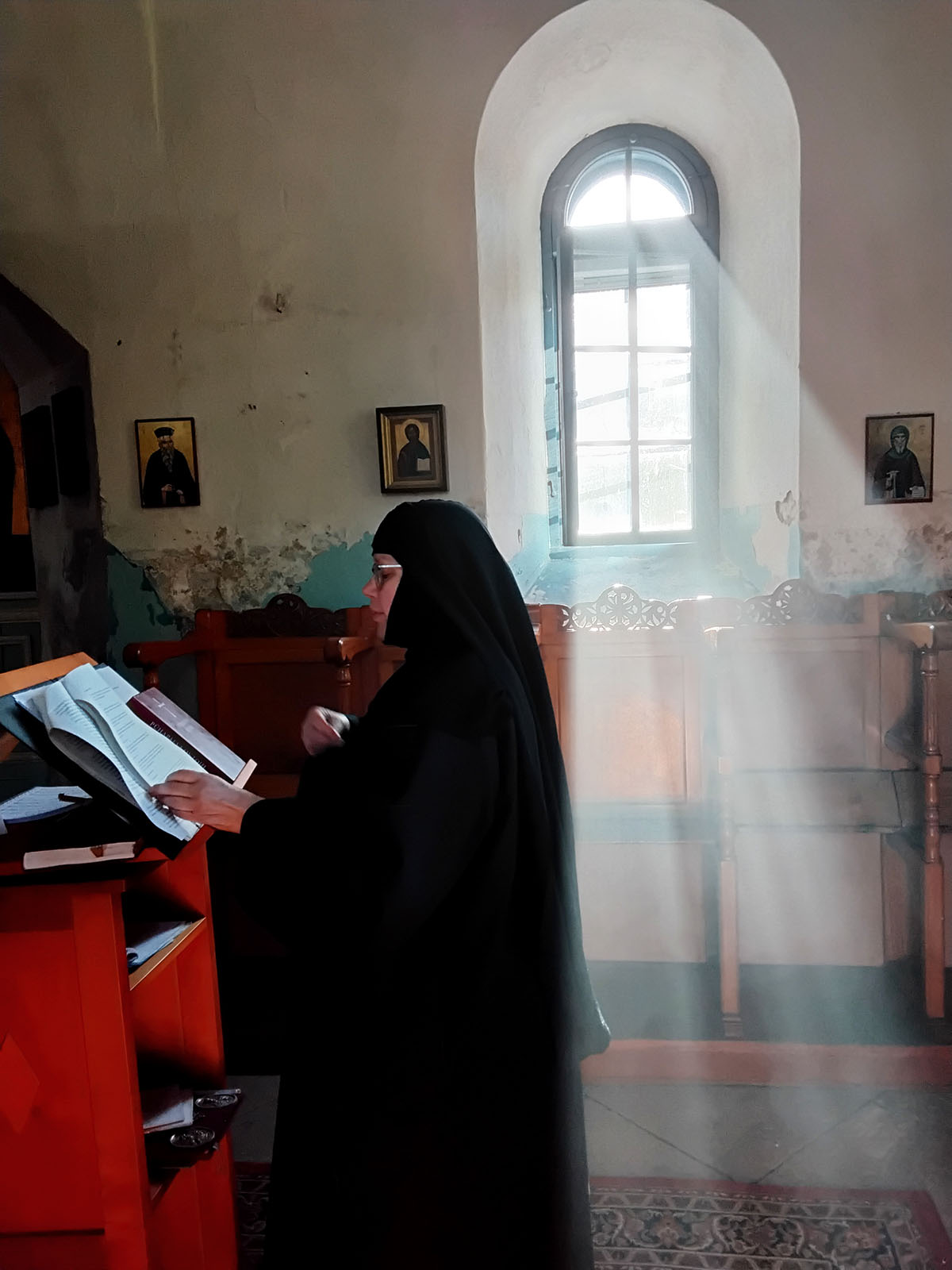
Work is a necessity not only for the practical activities of the monastery, but also for understanding the meaning of effort. Orthodox monasteries emphasize the importance of physical work, because it helps us understand that the body is involved in the spiritual struggle. The work varies from the most mundane tasks of cleaning, work in the kitchen andgarden, as well as construction, to practicing crafts and the arts, or even computer work. There is perhaps less rest in monasteries than in ordinary life, because a monastic ascetic wants to spend as much time as possible in prayer. That is why in monasteries people wake up at dawn to pray.
Orthodox monasteries are mainly coenobitic or communal monasteries – and so is the Reomäe Monastery. This means that no one in the monastery has any private property. There is no salary for work, but the monastery covers all the expenses of its residents. The ascetics wear the black monastic ascetic robe as a sign of their death to the old self, and they also change their name.
The monastery is like a big family, where everyone supports each other in mutual love. For a family to function, it must have a head: in a monastery this is the head of the monastery, and in the case of Reomäki also the spiritual father of the monastery. An important principle in a monastery is obedience not only to the monastery leaders, but also to the entire community. This teaches us obedience to the will of God. Going to a monastery is often described as leaving the world behind. That is why the monks no longer have much contact with their relatives or friends, but on the other hand they warmly welcome all visitors to the monastery. For the monastics, all people are their brothers and sisters.
In order to prevent worldly influence from reaching the monastery too much, the monastics do not read newspapers, watch television, listen to the radio or engage in other forms of entertainment, but their whole life is consecrated to God.
The Sisterhood of the Reomäe Monastery
Currently, there are two sisters living in the monastery, one of whom is an ordained nun and the other a novice. The monastics of the monastery come from Finland, but the common language of the monastery is Estonian. Since the monastery has its spiritual roots in Mount Athos and Greece, many monastic practices follow the Byzantine tradition. The monastery aims to convey the profound experience of Byzantine monastic life to the Nordic countries.
The nuns earn their living by sewing church textiles and farming the land as self-sufficiently as possible, but donations from pilgrims and friends of the monastery are also necessary to ensure the monastery’s livelihood.
Becoming a Monastic
Single, adult, Orthodox Christian women who have no financial or legal obligations to the world (e.g. loans, minor-aged children or other dependents) can become members of the sisterhood. Those interested can contact the nuns and come visit for a while and discuss their own vocation with the monastery’s spiritual father.
If, after her visit, the aspirant still feels God’s call to devote herself completely to Him, and the spiritual father of the monastery considers her suitable for monastic life, the person is accepted into the monastery as a novice. This means that the sister lives according to the daily rhythm of the monastery with the other sisters, but she has not yet promised to commit herself definitively to monastic life. During this probationary period, the novice learns obedience, renunciation of the luxuries of worldly life, and all the practical skills needed in monastic life. After a while, the novice is dressed in nun’s clothes so that she can get used to being a nun even before her actual tonsure.
Once shehas passed the probationary period (which usually lasts one to three years), the novice is ordained as a rassophore nun. At this time, she commits to remain in the monastery for the rest of her life, to be obedient to the sisters of the monastery and the spiritual father, and to renounce her property. As a sign of her new identity, she is given a new name during her tonsure. After this, the nun is officially a member of the sisterhood.
The highest degree of monastic tonsure is the Great Schema, to which a rassophore nun is usually tonsured after a few years of asceticism. During the tonsure to the Great Schema, the final monastic vows are taken, and sometimes the name of the person being tonsured is changed again during the tonsure to the Great Schema. Schema-nuns can be identified by their habit, which is embroidered with red thread with symbols related to the Passion of Christ.
In the Reomäe monastery, all sisters are tonsured to the Great Schema according to the old monastic tradition, while in Russian monasteries it is customary to tonsure mainly older monastics to the Great Schema. Saint Nicodemus of Mount Athos (1749–1809) calls for the Great Schema to be given to all ascetics at a fairly young age, because only then is it a true commitment to the monastic life, and therefore it should be relatively early in the ascetics’ monastic career, not at the end of it.
Spiritual Father
Since 2024, the spiritual father of the monastery has been His Grace Bishop Damaskinos of Haapsalu, a member of the brotherhood of the Holy Monastery of Xenophontos at Mount Athos. He was ordained as an auxiliary bishop of the Tallinn diocese on January 12, 2025.
Bishop Damaskinos joined the brotherhood of the monastery of Xenophon in 2015, but this was preceded by more than a decade of immersion in the monastic life of Mount Athos. In 2016 he was tonsured a monk and in 2018 he received the Great Schema and was ordained a deacon and a priest. Finally, in 2019, the Ecumenical Patriarch Bartholomew blessed him as a father-confessor (in Greek practice, only a few priests have the right to act as confessors).
In addition to his monasticism, Bishop Damaskinos has taught Orthodox theology in his homeland, Finland. He is also known as a promoter of Byzantine music in Finnish, Estonian and Swedish, as he has served as one of the main singers at the Xenophontos Monastery. The singing tradition of Mount Athos has become particularly familiar to him over the years.