
History of the Monastery
Church of the Holy Apostle Andrew the First-Called
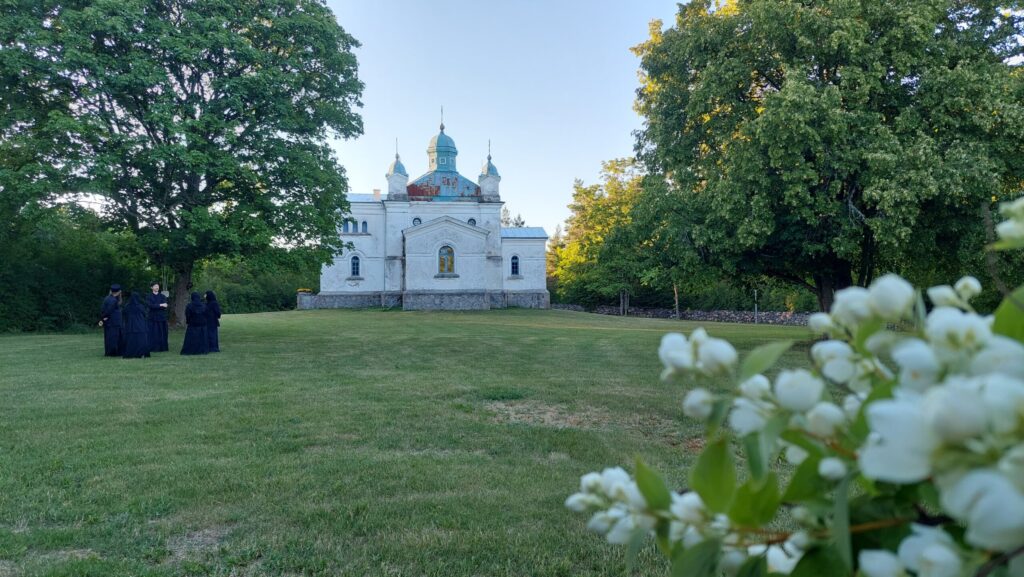
The Reomäe Monastery is located in the village of Reo, ten kilometers from Kuressaare in the direction of Kuivastu, on the island of Saaremaa, Estonia. The main church of the monastery is dedicated to the memory of the Holy Apostle Andrew the First-Called. In the 1840’s, a large religious conversion occurred in Saaremaa from the Lutheran Church to the Orthodox Church. The conversion continued until the end of the century, when almost forty percent of the island’s inhabitants were members of the Orthodox Church.
Since Saaremaa had previously had only one Orthodox parish, whose church, dedicated to St. Nicholas, was located in Kuressaare, new parishes had to be quickly established in different parts of Saaremaa. The Reomäe parish was founded in 1849 to serve the Orthodox people of the Püha and Valjala areas.
The first service of the parish, which had over a thousand members, was held on January 1,1850. Services were held in premises rented from the Reo Crown Manor until the church itself was completed in 1873. It, like nine other Orthodox churches completed in Saaremaa and the neighbouring island of Muhu in the same year, was built based on the drawings of the Rigan architect Heinrich Scheel. Bishop Veniamin of Riga and Miitavi, who had served as the parish’s first priest in 1849, consecrated the church on November 30, 1873 in memory of the Holy Apostle Andrew the First-Called. The cemetery, which is still in use, was also designated for the needs of the parish, and a rectory with outbuildings and a school were built, which still stand in the church yard.
During the First World War in August of 1915, the bells of all the churches were evacuated from Saaremaa to Russia, but for some reason the bells of Reomäe church were allowed to remain in place. The Reomäki church is the only church in Saaremaa that still has its original church bells that ring out the call to service. Officially, the Reomäki church never ceased to function during the Soviet era, but continued to hold services sporadically.. However, the church did not have its own priest after the death of its last shepherd, Father Vassili Tammistu, in 1955. After this, priests from neighboring parishes, mainly from Kuressaare, occasionally came to hold services in Reomäe, but the church fell into disrepair.
In the 1990’s, after Estonia regained its independence, services began to be held in Reomäe a little more often.
The Establishment of the Reomäe Skete
The Reomäe Monastery was originally founded at the initiative of Metropolitan Stefanos of Tallinn and All Estonia in cooperation with the Holy Monastery of the Venerable Forerunner in Anatoli-Agia, Greece. In November of 2007, Metropolitan Stefanos asked the head of the monastery, Abbess Theodekti, whether the monastery would be able to help establish a nunnery in connection with the Estonian Orthodox Church. The monastery in question already had a relationship with Estonia through its Estonian-born nun Theophili.
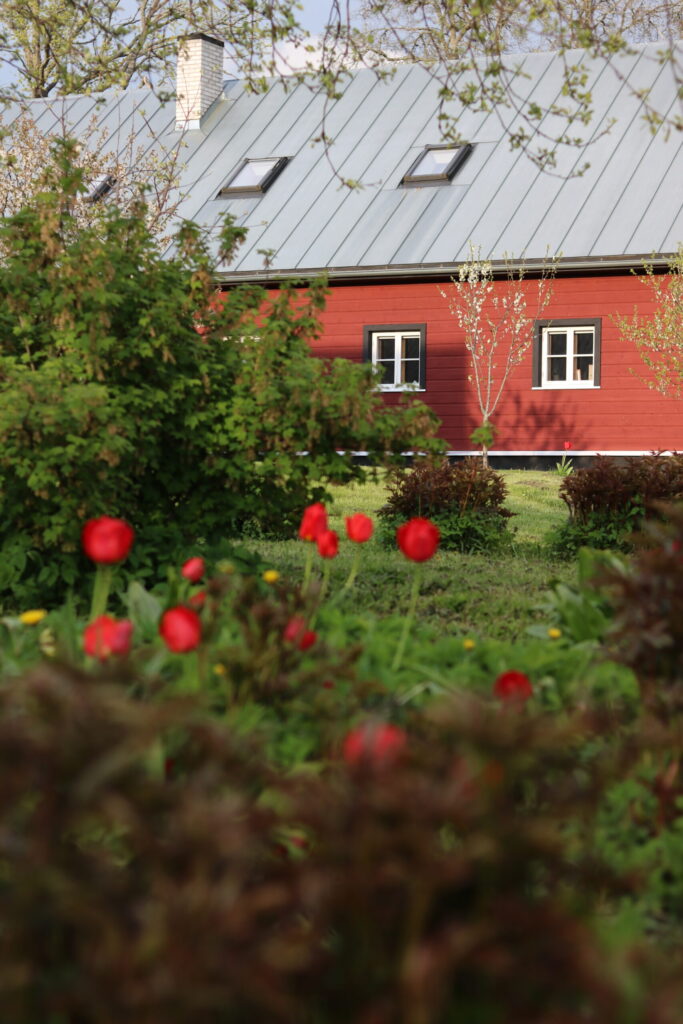
With the blessing of Gerondissa Theodekti and the local bishop, Metropolitan Ignatios of Dimitrias and Almiros, the first nuns moved from Greece to Saaremaa to a former cantor’s house in Ööriku in June 2009. However, monastic life in Ööriku proved impossible, so the sisters began to look for a new location for the monastery, which was found in the courtyard of the church of the Holy Apostle Andrew the First-Called in Reomäe. The sisters renovated the old rectory of the Reomäe parish to use as the main building of the monastery, and the barn into work spaces. Theyalso carried out necessary renovation work in the church. The overgrown courtyard was cleared and renovated.
After the renovation of the main building was complete, the sisters moved to Reomäe, and Metropolitan Stefanos blessed the renovated premises in June of 2012. Since the sisters of the monastery were still under the authority of their Greek mother monastery, it was not yet a proper monastery but a smaller monastic unit, or skete, under another monastery. It was known as the skete of the Holy Forerunner (Püha Eelkäija skiita), and its leader was nun Theofili.
Founding of the New Monastery
In February of 2023, the sisters of the (then) skete announced that they would move back to their mother monastery in Greece. At that time, Metropolitan Stefanos asked the Finnish hieromonk (now the bishop of Haapsalu) Damaskinos for help in continuing monastic life in Reomäe. Hieromonk Damaskinos belonged to the brotherhood of the Xenophontos monastery on Mount Athos, and one of his spiritual daughters had already expressed a desire to enter the monastic life under his spiritual guidance.After studying monastic life in Greece at Xenophontos’ sister monastery in Akritochori, the first novice moved to Reomäe in March, 2024. In June of the same year, she was ordained as a nun with the name Sister Porfyria. This was reportedly the first tonsure of a nun in the Estonian Orthodox Church since the restoration of independence.
In November of 2024, the Estonian Orthodox Church changed the monastery’s status from a skete to a monastery, and it is no longer subordinate to another monastery and has no administrative relations with other countries. In connection with the change in status, the monastery’s name was also changed. Traditionally, the monastery is called after the saint or feast to whom the main church of the monastery is dedicated, so the patron saint of the Reomäe church, the Holy Apostle Andrew, was added to the new name. In honor of the monastery’s history, the name also mentions the Venerable Forerunner. The official name of the monastery became Eesti Apostlik-Õigeusu Kiriku Aulise Eelkäija Ristija Johannese ja Püha Apostel Andreas Esmakutsutu Püha Klooster Reomäel (The Estonian Orthodox Holy Monastery of the Honorable Forerunner and Baptist John and the Holy Apostle Andrew the First-Called in Reomäe).